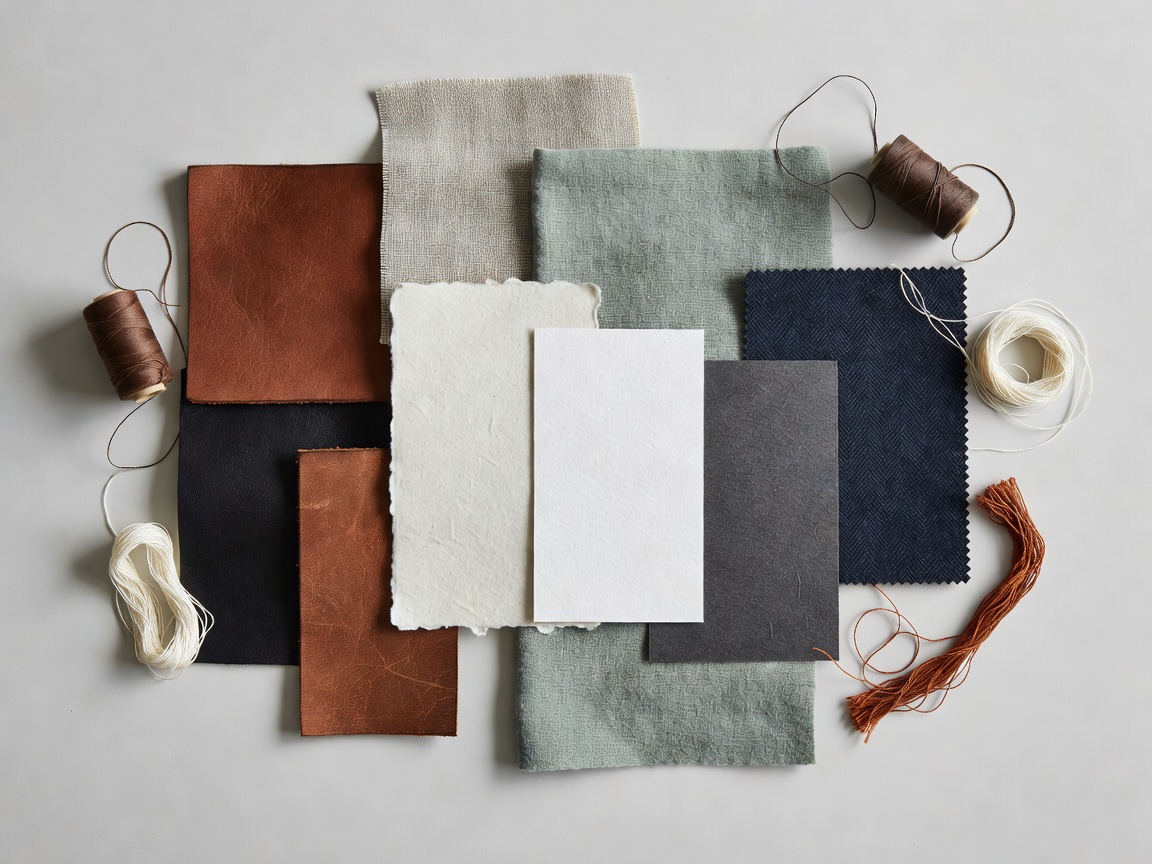
A book is a system of materials rather than a single surface. Each component responds to moisture, pressure, light, abrasion and handling in its own way. A repair that suits a flexible paper leaf may be unsuitable for a leather joint. Material identification is therefore part of assessment, even when the final aim is modest.
Leather and parchment
Leather is flexible, fibrous and sensitive to its history of manufacture, finishing and storage. It can contract, become stiff, lift from a board or lose surface material. Parchment is made from animal skin and responds strongly to environmental change; tension and cockling can affect both pages and bindings. Similar-looking surfaces can behave differently, so visual matching alone is not enough.
Paper, cloth and thread
Paper forms the text block and may also appear as endpapers, labels or pastedowns. Its fibres, sizing, coatings and inks influence repair choices. Book cloth can be woven, coated or laminated. It may split at joints while retaining colour and pattern that matter to the object's identity. Thread connects sections and supports opening; replacing it changes the mechanics of the book.
Boards may be made from wood, pasteboard or layered sheet materials. They provide stiffness, but their edges can reveal construction and later alterations. A replacement board can improve stability, yet it may remove original evidence or alter weight and opening behaviour. Pros and cons should be recorded before a decision is made.
Adhesives and decorative materials
Adhesives may include historic animal-based materials, starch-based pastes or later synthetic products. Their age, flexibility and solubility vary. Decorative tooling, paper labels, clasps, ties and pigments can be fragile or sensitive to moisture. Solvents, cleaning agents, leather dressings and adhesive recipes should not be tested at home on valuable material.
Material-led preservation
Material compatibility affects both treatment and storage. Stable temperature and humidity, controlled light, clean handling and suitable support reduce stress without changing the object. Housing should not crush a fragile spine or trap moisture. A qualified specialist can advise where the material combination is unusual, friable or historically important.
Good for
This guide helps owners prepare questions about mixed-material bindings, unknown coverings, parchment leaves, decorative surfaces and previous repairs.
What to know
- Material identification is often provisional until examined closely.
- Matching colour is not the same as matching behaviour.
- New materials should be selected for compatibility and purpose.
- Preserving original material may be more important than visual uniformity.