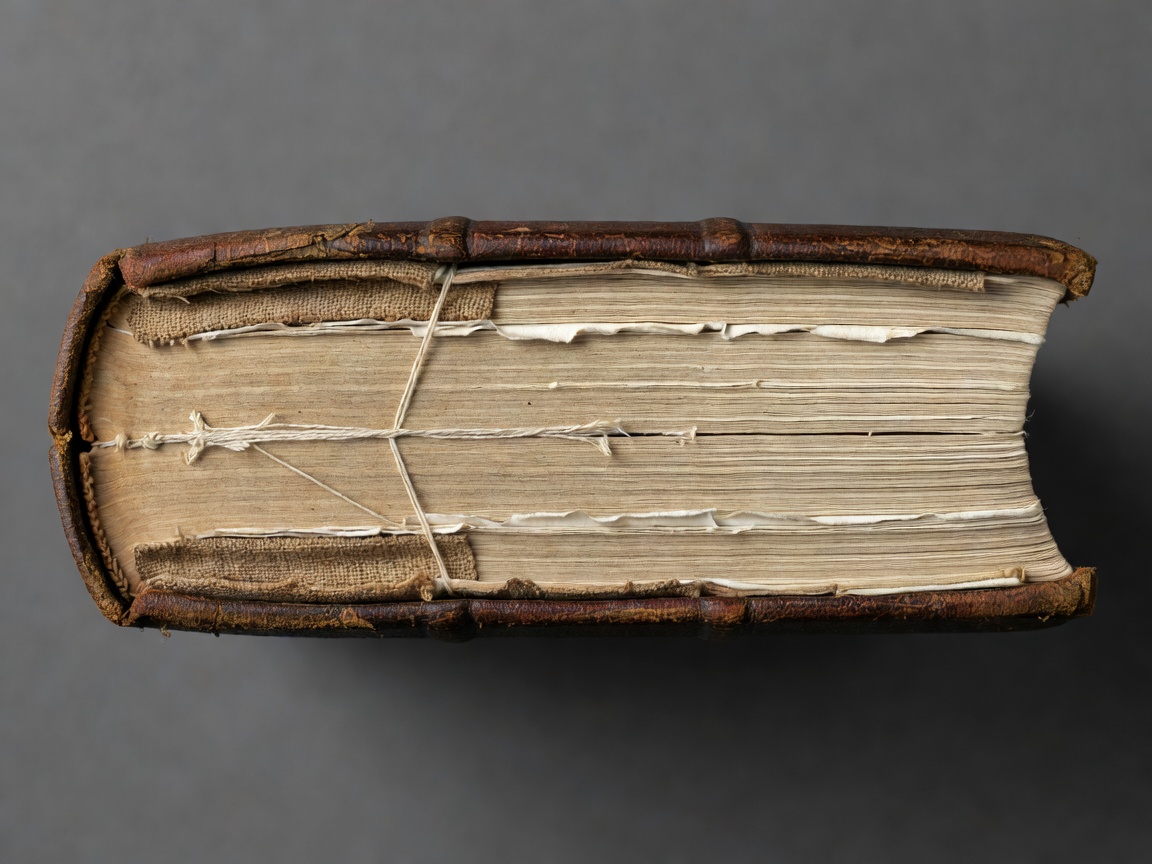
Structural repair begins by understanding how a book was made. A volume may be sewn through supports, folded into sections, glued, laced or built with later repairs. What appears to be a loose cover can reflect a broken hinge, failed sewing support, detached endpaper or distortion in the boards. Correct diagnosis matters because a visible symptom may not be the source of the problem.
Reading the binding
The spine covering protects and often conceals the connection between text block and boards. Hinges are flexible junctions that allow opening; endpapers connect the text block to the covers and may carry evidence of earlier work. Boards can be wood, pasteboard or layered materials. Their thickness, grain and attachment affect how the book moves.
Sewing is the thread-based connection between sections. If it remains sound, retaining it may preserve original construction. If it has failed, a conservator must consider whether local support is possible or whether a broader structural response is justified. Re-sewing can improve function, but it may also alter historical evidence and introduce tension if poorly matched.
Repair choices
Local repair targets a limited failure, such as a detached hinge or lifting covering. It usually changes less and can retain more of the original binding. The disadvantage is that adjacent weaknesses may remain. A more extensive rebinding may provide a coherent structure but can remove or obscure original material. Neither option is automatically correct; the book's purpose and significance set the threshold.
Boards and corners often show handling wear first. Replacement is a major decision because original board material can contain evidence. Spines may be supported without recreating every missing layer. Endpapers can be retained, repaired or replaced depending on their role and condition. A visibly modest repair can be the more honest result when the aim is stability rather than visual novelty.
Handling and opening
Opening angle, support and frequency of use should be part of planning. A book intended for occasional display has different requirements from one that must be consulted repeatedly. Forcing a tight opening, pressing down a damaged spine or using pressure to flatten boards can make failures worse. Valuable or fragile books should be examined by a suitably qualified professional.
Good for
This guide is useful for volumes with detached boards, split hinges, exposed sewing, lifting spine coverings, loose endpapers or an uneven opening action.
What to know
- Binding appearance does not reveal every structural fault.
- Original sewing and board material may be significant evidence.
- Rebinding can improve use but may reduce historic authenticity.
- Repair scope should match the intended handling pattern.