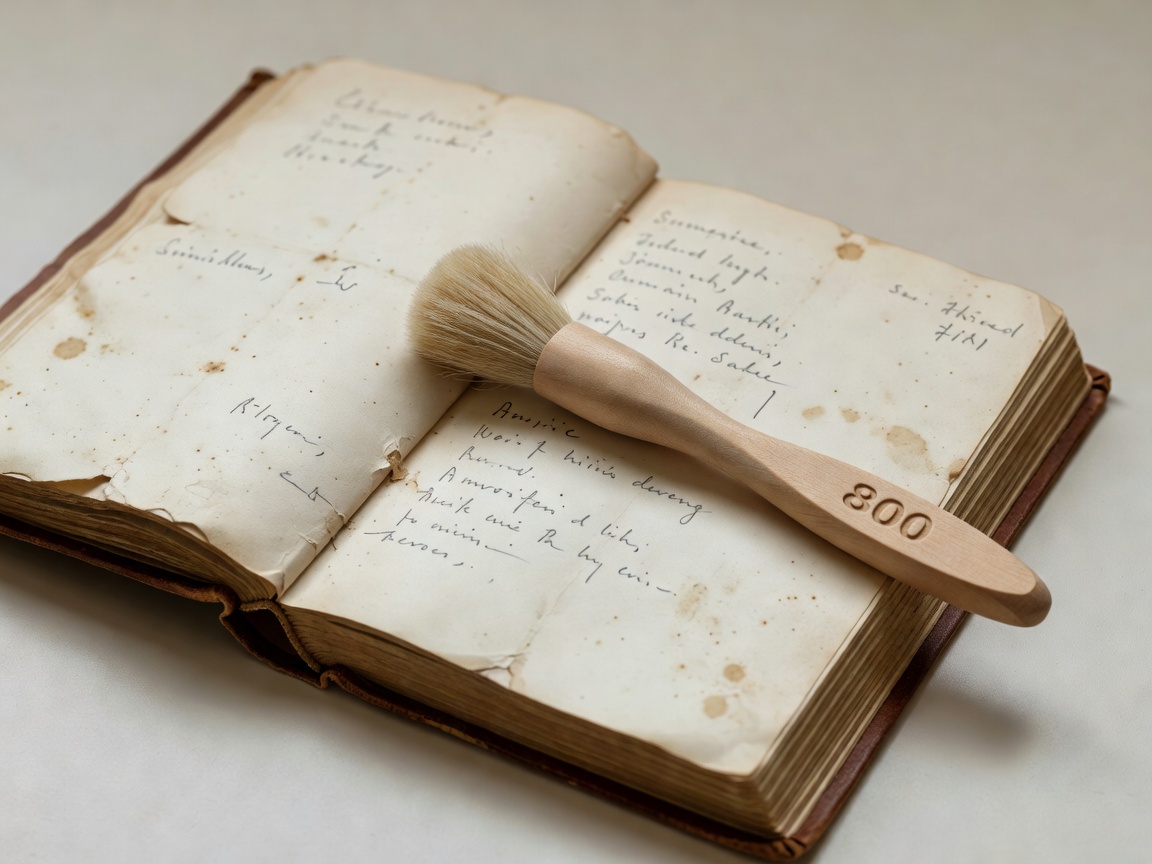
Book restoration can mean different things. It may describe stabilising a fragile structure, improving access to text, returning displaced components, or making a damaged volume presentable. Conservation is the wider discipline: it considers material evidence, future handling and the risks introduced by intervention. A qualified professional should assess valuable or fragile material before any irreversible action.
Initial assessment and documentation
The first stage records what is present. This includes the binding type, sewing pattern where visible, paper characteristics, pagination, inscriptions, labels, repairs and areas of loss. Condition notes distinguish active damage from historic wear. Photographs and measurements create a baseline and help separate the original object from later additions.
Documentation also captures context. A family Bible, a working reference volume and a unique archival item may have different priorities. The desired outcome should be stated early: safe consultation, improved opening, protection of loose leaves, or visual coherence. A complete-looking cover is not automatically the most responsible goal.
Treatment planning
A treatment plan translates observations into a proportionate scope. It should identify priorities, materials likely to be affected, proposed methods at a high level, areas that will remain untouched and points requiring approval. Where uncertainty exists, a specialist may recommend examination, testing or a limited intervention before broader work.
Minimal intervention is not neglect. It means changing only what is necessary for the agreed purpose. A stabilising repair can preserve evidence that would disappear during reconstruction. Conversely, a heavily compromised binding may need structural attention before pages can be handled safely. Pros include lower material change and clearer historical evidence; the trade-off may be a less uniform appearance.
Repair stages and review
Work is normally documented as it progresses. Structural repairs, paper repairs and surface finishing should be considered together because one can place stress on another. Materials need to be compatible with the book and, where appropriate, removable or reversible. Chemical treatments, adhesives, leather work and mould or water damage require specialist judgement rather than household experimentation.
Finishing is a review, not a cosmetic race. The book should be checked against the agreed purpose: can it be supported, opened or stored appropriately? Are new repairs identifiable on close inspection? Has documentation been updated? Preservation advice may cover housing, handling, light, humidity and future monitoring.
Good for
This staged approach suits inherited books, historic volumes, collectible bindings and objects whose condition is not yet understood. It is especially useful when several options appear possible and the owner wants a documented decision rather than an automatic full restoration.
What to know
- Condition is not the same as value, age or appearance.
- The requested outcome should be agreed before treatment.
- Full restoration is not always necessary or desirable.
- Exact methods depend on the individual materials and damage.